

By [Growthclicks] | Travel & Tourism Marketing
The travel industry has never been more competitive. According to the World Travel & Tourism Council, the sector’s global economic contribution reached an all-time high of $11.1 trillion in 2024 — and with online sales projected to make up 76% of all travel and tourism revenue by 2028, the battle for bookings is almost entirely digital.
With online booking platforms, global aggregators, and thousands of independent agencies fighting for the same holidaymaker, standing out requires more than beautiful destination photography and a well-designed website. You need a focused, data-driven digital marketing strategies for travel agency that attracts the right travellers, nurtures them through a 30–60 day research journey, and converts their dream into a confirmed booking.
Whether you are running a boutique luxury agency or a high-volume package tour operator, the ten strategies below form a complete digital marketing strategies for travel agency that you can implement today — or hand to your team as a prioritised growth roadmap.
1. Build a Destination-Led SEO Content Strategy
Search engine optimisation is the single highest-ROI long-term channel for any travel business. Research from Champ Digital confirms that 69% of tourism sales occurred online in 2023, and more than 90% of travellers research online before booking — making search visibility a non-negotiable priority.
But ranking against Booking.com, Expedia, and TripAdvisor on generic terms is nearly impossible. The winning digital marketing strategies for travel agency in organic search is to go niche and go deep.
Create content hubs organised by destination. For example, a “Complete Guide to Bali” pillar page supported by cluster articles covering the best time to visit, visa requirements, hidden temples, honeymoon itineraries, and family-friendly resorts. This topical authority signals expertise to Google and earns rankings on long-tail searches that aggregators simply do not bother with.
Target transactional keywords with clear commercial intent: “small-group Morocco tours 2025”, “luxury Maldives packages with flights”, “solo female travel Vietnam itinerary”. These searches have lower competition and higher purchase intent than generic head terms.
According to Skift research cited by TravelPerk, search engines are the top resource used by travellers for travel guidance, relied upon by 46% of travellers — ahead of review websites, friends’ recommendations, hotel websites, and OTAs. Owning organic search placements means being present at the very first moment of travel intent.
Publish at least four well-researched articles per month. Update top-performing pages every quarter. Track rankings weekly and refresh any page that slips below position five before a competitor overtakes it.
2. Optimise Your Google Business Profile for Local Discovery
Thousands of travellers search for “travel agency near me” or “[city] travel agent” every month. Claiming and optimising your Google Business Profile is one of the fastest wins in any digital marketing strategyies for travel agency — it is free, takes a few hours to set up properly, and puts you directly in front of people ready to book.
As noted by BH&P’s travel marketing trends report, Google Business Profile now supports posts and visuals, giving agencies a direct way to engage prospects directly in search results without them ever clicking through to your website.
Complete every field: services offered, business hours, booking link, photos of your team and office, and a keyword-rich description. Actively collect reviews — agencies with 50+ four-star-and-above ratings dominate the local pack. Respond to every review, positive or negative. Post updates and seasonal offers weekly through the Posts feature to keep your profile active in Google’s eyes.
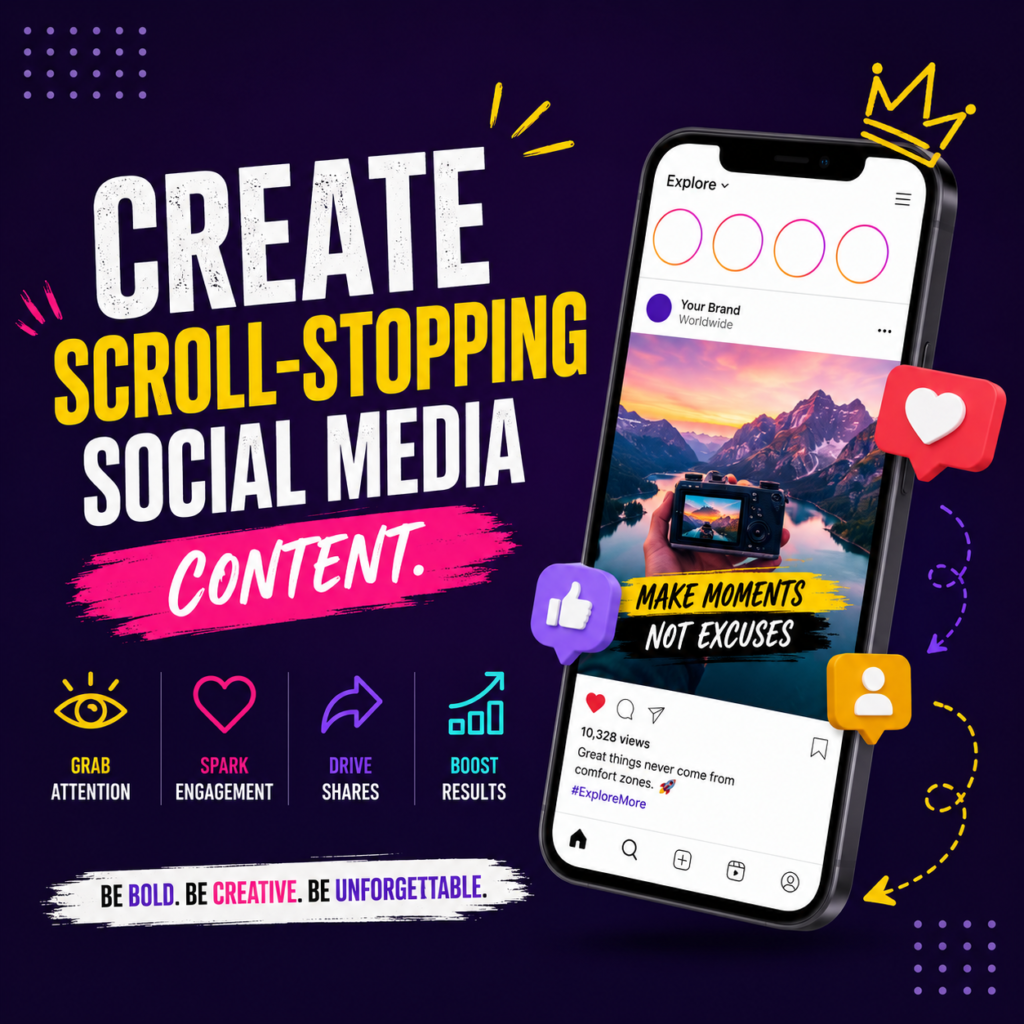 3. Create Scroll-Stopping Social Media Content
Travel is the most visual category on social media. According to Amra & Elma’s travel marketing statistics, 35% of people discover new travel destinations on Instagram, and the hashtag “travel” on TikTok commands an extraordinary 265.2 billion views.
A well-executed social presence does not just build brand awareness — it pulls prospective customers into the top of your funnel daily. The key is platform-specific content, not the same post recycled across every channel.
On Instagram, publish Reels three to four times per week showcasing destination highlights, travel tips, and client trip moments. Carousels outperform single images by roughly two times — use them for “5-day Amalfi Coast itinerary” or “What $5,000 gets you in Japan vs. Thailand” comparisons.
On TikTok, raw and authentic content wins over polished agency videos. “Pack with me for Santorini”, “Day in Kyoto”, and “Things nobody tells you about booking a safari” formats consistently outperform branded ads. As BH&P highlights, roughly eight new users join TikTok every second — making it a critical discovery channel for the 25–40 demographic who research travel heavily on the platform before converting.
Pinterest deserves more attention than most agencies give it. Pins have a lifespan of months, not minutes — a beautifully designed “Honeymoon in Maldives” pin can drive traffic to your website for over a year from a single upload.
Beyond organic reach, Statista data confirms that social media influences 75% of leisure travellers’ destination decisions. Any serious digital marketing strategy for travel agency must treat social as a core channel, not an afterthought.
4. Run Google Search Ads for High-Intent Traffic
Organic SEO takes months to gain traction. Google Ads captures intent right now. A smart digital marketing strategies for travel agency pairs both — SEO for sustainable long-term growth, paid search for immediate, predictable bookings.
The investment is significant industry-wide for good reason. According to Amra & Elma, digital advertising spend in the US travel industry reached nearly $6.79 billion, growing at 14.3% — the third consecutive year travel advertisers have boosted spending faster than any other sector.
Importantly, Champ Digital reports that the average click-through rate for Google Ads in the travel industry is a remarkable 10.03%, well above the overall average of 6.11%. Travel intent searches convert at high rates when ads and landing pages are tightly aligned.
Focus your Search campaigns on destination package keywords with commercial intent. Use phrase and exact match targeting to avoid wasting budget on informational queries. Add negative keywords aggressively — “cheap”, “DIY”, “free itinerary” and similar terms attract visitors who are not going to hire an agency.
Once you have more than fifty conversions per month, switch to Target ROAS bidding and let Google’s algorithm optimise toward your actual revenue return. Aim for a ROAS of 4× or higher before scaling spend. Anything below 2.5× needs immediate creative and landing page attention before you add more budget.
5. Invest in Meta Ads With a Retargeting Funnel
Facebook and Instagram advertising remain essential components of a complete digital marketing strategies for travel agency, particularly for reaching travellers in the dreaming and consideration phase before they have started Googling specific packages.
Research from Expedia cited by Champ Digital shows that nearly one in five travellers said advertising directly influenced their decision to book a trip — proof that paid social reaches people at the inspiration stage that search ads cannot.
Build your audience strategy in three layers. First, cold audiences — interest-based targeting (travel, luxury holidays, adventure sports) and Lookalike audiences built from your best customers. Second, warm audiences — people who have visited your website, watched your videos, or engaged with your social content. Third, hot retargeting — visitors who browsed a specific destination page and did not enquire.
Each layer needs different creative. Cold audiences respond to aspirational destination beauty content. Warm audiences need social proof — reviews, testimonials, “Meet the team” formats. Hot retargeting should feature the specific destination they viewed, a clear offer, and urgency (“Only 4 spots remaining for the June departure”).
6. Build an Email Marketing Engine
Email consistently delivers the highest ROI of any digital channel — and for travel specifically, the numbers are even stronger. According to EmailToolTester’s industry breakdown, the travel, tourism, and hospitality industry reports an email marketing ROI of $53 for every $1 spent — significantly higher than the already impressive cross-industry average of $36 per $1.
Yet many travel agencies treat email as an afterthought, sending the occasional newsletter with no segmentation or automation.
A sophisticated digital marketing strategies for travel agency uses email as a full-funnel nurture tool. Rezgo’s guide to travel email marketing notes that in 2024, 53% of small businesses across the US, Canada, UK, and Australia named email marketing as their most frequent strategy for gaining and retaining customers — and it outperforms both direct mail and social media on ROI.
New subscribers should receive a welcome sequence over 14–21 days: an introduction email with a free lead magnet (visa checklist, packing guide, destination quiz), a social proof email featuring real client stories, a destination spotlight tailored to their interests, and finally an urgency-driven offer.
Segment your list by traveller type: luxury, family, adventure, honeymoon, solo. According to Mailchimp data cited by OptinMonster, segmented email campaigns have a 14.31% higher open rate than non-segmented ones. Your conversion rates will improve dramatically when a honeymooner receives a Maldives water villa offer instead of a group backpacking tour, and vice versa.
7. Produce Video Content That Inspires and Informs
Video is the dominant content format across every digital channel, and travel is uniquely positioned to leverage it. Destination footage, client testimonials, “A day in the life of our guide in Morocco”, and agent travel diary vlogs all perform exceptionally well.
Short-form video (under 60 seconds) belongs on TikTok, Instagram Reels, and YouTube Shorts for discovery. Long-form video (10–20 minutes) on YouTube works brilliantly for consideration-stage content: full destination guides, packing tutorials, and “Is [destination] worth it?” style reviews that travellers search while researching a trip.
YouTube is the second-largest search engine in the world. A strong digital marketing strategies for travel agency that ignores YouTube is leaving significant organic reach on the table. Create one in-depth destination video per month and optimise it with keyword-rich titles, descriptions, and chapters.
The data on video’s effectiveness in travel is compelling. BH&P’s travel marketing trends analysis highlights that combining content marketing with short, visually appealing videos on high-growth platforms dramatically expands audience reach — particularly important as attention spans shorten in the social-first era.
8. Leverage Influencer Partnerships Strategically
Influencer marketing in travel does not have to mean paying a celebrity $50,000 for a sponsored post. Micro-influencers — creators with between 10,000 and 100,000 engaged followers in a travel or lifestyle niche — consistently deliver better engagement rates and more authentic content than mega-influencers, often in exchange for a complimentary trip rather than a cash fee.
BH&P identifies micro-influencers as one of the most powerful digital marketing trends in the travel industry, noting that they build genuine trust with their audiences in ways that large-scale influencer deals cannot replicate.
Identify creators whose audience matches your ideal customer profile. A UK-based food and travel micro-influencer is worth far more to a European culinary tour operator than a generic travel influencer with a million global followers. Negotiate content rights so you can repurpose their photos and videos in your own paid ads — strong UGC creative typically outperforms polished agency-produced content in Facebook and Instagram campaigns.
This approach also aligns with the broader finding from Amra & Elma’s research that 73% of global travellers seek more authentic, local experiences — a value that extends to the marketing content they respond to.
9. Use Conversion Rate Optimisation on Your Website
Driving traffic through any digital marketing strategies for travel agency only delivers returns if your website converts visitors into enquiries. Most travel agency websites lose potential customers through slow loading speeds, poor mobile experience, confusing navigation, or a lack of clear calls to action.
The mobile stakes are particularly high. According to Hotelagio, 83% of travellers now research trips on a mobile device before booking, and 70.5% of online traffic for travel and hospitality websites comes from mobile devices (Statista). A website that is not mobile-first is burning your ad spend.
Additionally, Champ Digital reports that 52% of mobile travellers would switch to a different site or app if the one they are using takes too long to load. Speed is not optional — it is a direct conversion lever.
Run your site through Google PageSpeed Insights and target a Core Web Vitals score that keeps LCP under 2.5 seconds. Add clear trust signals on every destination page: accreditations, client review counts, years in business, and photos of your team. Place a prominent “Get a free quote” or “Speak to an expert” CTA above the fold. Use live chat — agencies that install live chat on high-intent pages typically see a 20–40% increase in enquiries without changing a single ad.
For context on how much room there is to improve: Amra & Elma cite that the average conversion rate for travel websites is around 4.7%, but top-performing platforms can achieve rates as high as 23%. The gap between average and excellent is a conversion rate optimisation problem, not a traffic problem.
 10. Track, Measure, and Optimise Relentlessly
The most sophisticated digital marketing strategies for travel agency in the world fails without proper measurement. Install Google Analytics 4 and Google Tag Manager before you run a single campaign. Set up conversion tracking for every enquiry form, phone call, and booking action on your site.
One data point that should inform every agency’s approach: research cited by WeGoPro shows the typical traveller visits 38 different websites before finalising a booking. This means attribution is complex — last-click measurement will undervalue upper-funnel channels like SEO, social media, and display. Use Google Analytics 4’s data-driven attribution model to get a more accurate view of which channels are genuinely contributing to conversions.
Review performance monthly across every channel. Track cost per lead and cost per booking by channel, not just overall totals — knowing that Google Ads produces bookings at $180 each while Facebook delivers them at $340 allows you to reallocate budget intelligently. Monitor your organic rankings weekly. Review email open and click rates per segment. Audit social reach and engagement rates monthly and adjust your content mix accordingly.
TOMIS’s 2025 Tourism Marketing Report reinforces this point: the agencies growing fastest in the current environment are those investing in stronger branding, optimised websites, and high-converting paid media campaigns — and measuring all of it rigorously to reduce reliance on expensive third-party platforms.
The agencies that grow fastest are not those with the biggest budgets — they are the ones that test, measure, learn, and improve every 30 days.
Putting It All Together
A complete digital marketing strategy for travel agencies is not about doing everything at once. It is about building a system: organic content and SEO for long-term, compounding growth; paid search and social for immediate, scalable bookings; email and retargeting to convert the warm audiences your awareness channels generate; and measurement to make every pound or dollar work harder over time.
Start with the channels closest to conversion — Google Search ads and your email welcome sequence — then build the content engine underneath. Within 90 days you will have a marketing foundation that generates enquiries consistently, nurtures prospects intelligently, and gives your agency a sustainable competitive advantage in a crowded market.
The travellers are out there, dreaming about their next adventure. Make sure your agency is the one that helps them take it.
Sources & Further Reading
- World Travel & Tourism Council — Global Travel Statistics 2024
- Statista — Digitalization of the Travel Industry
- Amra & Elma — Best Travel Marketing Statistics 2025
- Amra & Elma — Travel Marketing Statistics 2026
- Champ Digital — 25 Travel & Tourism Marketing Statistics
- EmailToolTester — Email Marketing ROI by Industry
- OptinMonster — Travel Industry Email Marketing Guide
- Rezgo — Email Marketing for Tour Companies
- Hotelagio — Online Travel Booking Statistics 2025
- TravelPerk — Online Travel Booking Statistics
- TOMIS — 2025 Tourism & Travel Marketing Report
- BH&P — Top Marketing Trends in the Travel Industry
- Google PageSpeed Insights
- Google Analytics 4
Looking to implement a tailored digital marketing strategy for your travel agency? Contact our team for a free strategy consultation.
